Board-certified eye surgeon
Entrust your eyes and vision to a highly skilled team. Experience timely, professional, and exceptional ophthalmic care. Schedule your evaluation today.
Thank you for choosing the experts! Routine, complex, and everything in between: Dr. Collett offers comprehensive ophthalmic services to ensure his patients obtain the best possible visual outcomes. Schedule an evaluation today.
Entrust your eyes and vision to a highly skilled team. Experience timely, professional, and exceptional ophthalmic care. Schedule your evaluation today.
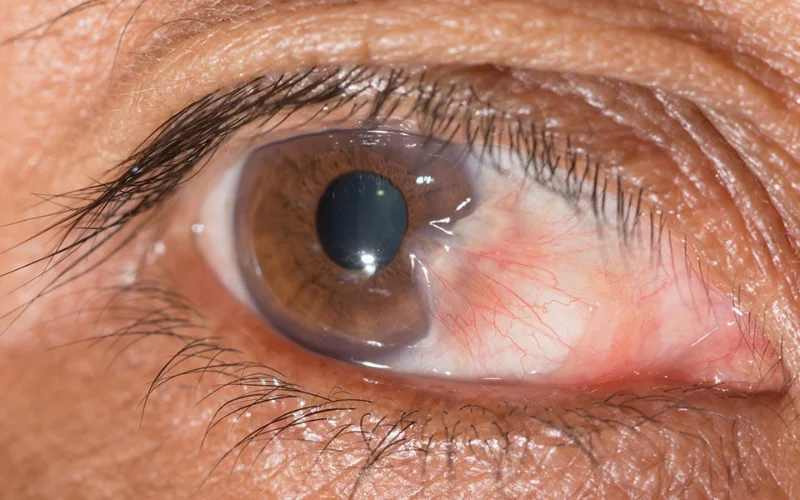
A pterygium is a wedge-shaped growth of fibrous tissue that spreads from the white of the eye onto the cornea, often called "surfer's eye." It is driven by years of UV, wind, and dust exposure. Unlike a pinguecula - which stays on the white of the eye - a pterygium invades the cornea and can distort vision. Dr. Collett removes the growth and revitalizes the ocular surface right in our Bellaire office using a regenerative amniograft for a lower recurrence rate.
A pterygium is a benign, non-cancerous growth of fibrous tissue and blood vessels that starts on the conjunctiva - the clear membrane over the white of the eye - and grows toward and onto the cornea. It is called "surfer's eye" because it is most common in people with heavy sun and outdoor exposure. Small pterygia are simply monitored. Larger ones that reach toward the visual axis can cause astigmatism, blur vision, and create a persistent gritty or red appearance that leads patients to seek removal.
These two growths are often confused because both come from UV and wind exposure, but they behave differently:
A pinguecula can, over time, progress into a pterygium if it begins encroaching onto the cornea. Learn more in our guide to pterygium vs. pinguecula.
Years of cumulative ultraviolet sunlight exposure are the primary cause, which is why pterygium is common in outdoor workers and people who spend long hours on the water. Wind, dust, and a dry climate add to the risk. Houston's sunny Gulf-Coast climate and outdoor lifestyle put many area residents at higher risk. UV-protective wraparound sunglasses and a brimmed hat are the best prevention, and they also reduce the chance of recurrence after surgery.
Common symptoms include redness, irritation, a gritty foreign-body sensation, blurry vision, astigmatism, contact-lens intolerance, and cosmetic concern. Many small pterygia can simply be observed. Dr. Collett generally recommends removal when the growth is advancing toward the visual axis, inducing astigmatism that blurs vision, causing chronic irritation or redness, interfering with contact-lens wear, or becoming cosmetically bothersome.
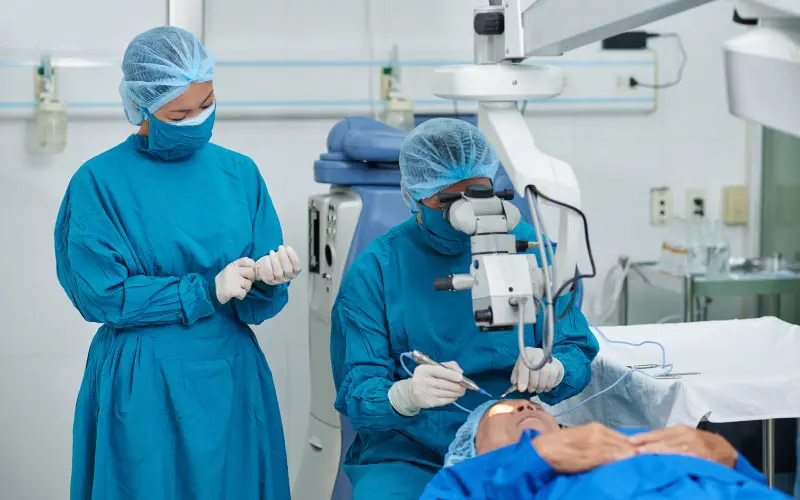
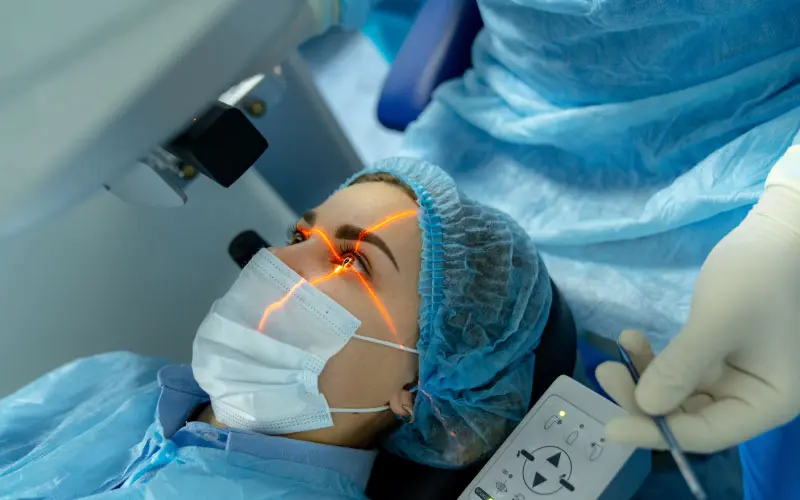
The key to a durable result is what is placed after the pterygium is excised. Older "bare-sclera" techniques left the surface exposed and carried higher recurrence rates. Today the two regenerative options are a conjunctival autograft (tissue moved from under the patient's own upper eyelid) and an amniotic-membrane graft (amniograft). Dr. Collett removes the pterygium and places an amniograft to promote regenerative healing of the ocular surface and lower the chance the growth returns. The procedure is done in our own in-office surgical suite, and because this is a single-surgeon practice, the same surgeon who evaluates you performs the surgery and follow-up. You can read more about Dr. Collett's surgical experience.
Pterygium removal is typically considered medically necessary when the growth affects vision or causes chronic irritation, so it is usually covered by Medicare and most insurance plans, leaving only your standard deductible or copay. A purely cosmetic removal may be out-of-pocket. Out-of-pocket cost varies by plan, and our Bellaire office verifies your benefits before scheduling. For any balance, we offer financing options through CareCredit. Spanish-speaking patients can read about atención de pterigión / carnosidad en español.
Learn more about pterygium surgery. Read our blog post: Pterygium Excision with Amniograft: Advanced Regenerative Treatment.
Strong partnerships with healthcare providers
Quick access to our very own surgical suite
Current diagnostic instruments and technology
Locally owned practice dedicated to our community
See every procedure we perform on our eye procedures page, or read about Interventional Dry Eye Treatment, and OptiLight IPL Therapy.

©Red Barn Media Group 2026